
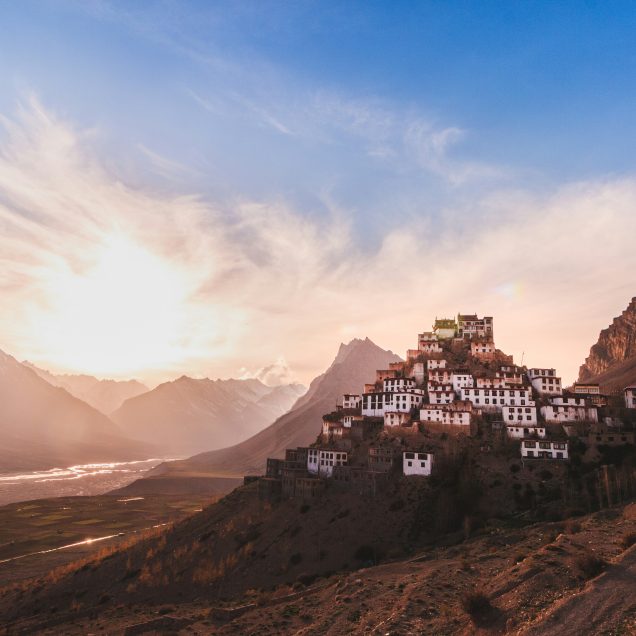
Key Monastery (also known as Ki Gompa) is a historic Tibetan Buddhist monastery perched on a hilltop in Spiti Valley, Himachal Pradesh, India, serving as the largest monastery in the region, a significant spiritual center for the Gelugpa sect, and an architectural marvel featuring a maze-like structure with murals and ancient artifacts, attracting spiritual seekers and travelers alike.
Sights

Map
Info
Key Monastery – Key Features & Significance
Location & Altitude:
Key Monastery is situated at an altitude of over 13,000 feet (around 4,166 meters) above sea level, near the Spiti River in Himachal Pradesh. Its elevated hilltop location offers breathtaking panoramic views of the entire Spiti Valley, surrounded by rugged mountains and cold desert landscapes. The remote setting adds to its spiritual charm and makes the journey itself a memorable experience.
Architecture:
The monastery is built in the traditional Pasada style, which gives it the appearance of a fortified castle rather than a typical monastery. It features a complex structure with multiple levels, interconnected rooms, narrow corridors, and winding staircases. The design includes hidden courtyards and prayer halls, giving it a maze-like layout that reflects both defense and functionality. Its layered construction is a result of repeated rebuilding over centuries.
Spiritual Hub:
Key Monastery serves as one of the most important centers of Buddhist learning in Spiti Valley. It is home to hundreds of monks who live, study, and practice Tibetan Buddhism here. The monastery is closely associated with the teachings of the Great Translator Lochen Rinchen Zangpo and the renowned Buddhist teacher Atisha. It acts as a training center where young monks receive religious education and spiritual guidance.
Historical Resilience:
Established in the 11th century, Key Monastery has survived numerous invasions, including Mongol attacks, as well as natural disasters like earthquakes. Due to these events, the monastery has been rebuilt multiple times, which is why it has a distinctive, uneven, and layered architectural style. Each reconstruction has added to its historical depth and uniqueness.
Cultural Treasures:
The monastery houses a rich collection of ancient artifacts, including beautiful murals, thangka paintings, rare manuscripts, and statues of Buddha. It also preserves ancient weapons that were once used for defense, showcasing its historical importance. Additionally, the monastery has unique musical instruments used during traditional religious ceremonies and masked dance festivals, reflecting the vibrant cultural heritage of the region.
![Spiti Circuit Tour Package From Chandigarh - [10Nights / 11Days]](https://www.hptourtravel.com/wp-content/uploads/2022/07/Spiti_Gallery_Image_4-636x426.webp)
